Types of Saltwater Aquariums
Before you jump in and start buying equipment, it's important to understand the type of aquarium that you ultimately want to have. There are a lot of options when it comes to tanks, filtration, livestock, and accessories, but all ultimately are used to build one of the following types of saltwater aquarium.
All types of saltwater aquariums have the same base requirements:
Substrate
Sand or gravel for the bottom. "Live sand" contains beneficial bacteria.
Live Rock
Provides biological filtration. Aim for 1 to 2 pounds per gallon.
RO/DI Water
Pure water is essential to prevent algae outbreaks and maintain fish health.
Temperature Control
A heater (or chiller) to maintain stable water temperatures.
Lighting
Requirements vary significantly based on whether you keep coral.
Filtration
Mechanical and chemical filtration to remove waste and debris.
Benefits
- ✓ Easier to maintain, more room for error
- ✓ Less up-front knowledge required
- ✓ Cheaper/fewer equipment requirements
Drawbacks
- ✗ Can't keep coral or anemones
- ✗ Less similar to a natural reef environment
Fish Only With Live Rock
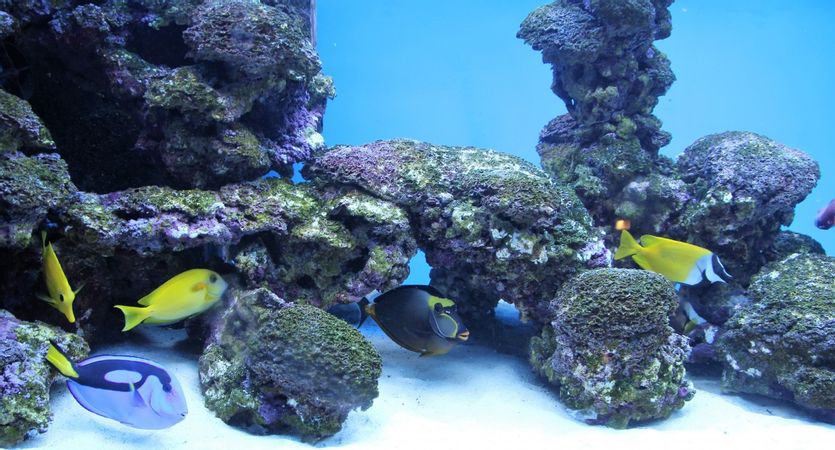
A fish only with live rock aquarium (commonly abbreviated as FOWLR) is generally the best starting point for beginners as you only need the base requirements listed above.
This type of aquarium setup is by far the most capable of handling fluctuating water parameters that are common as a beginner learns to maintain their tank. You can focus only on a handful of water quality parameters like nitrates and ignore most others like alkalinity and calcium.
This additional room for error also means that filtration requirements are lessened. You should absolutely purchase the best filtration that you can, but you can safely skip the more expensive high-end canister filters and protein skimmers at first to lessen your initial upfront cost.
You can also safely skip most of the more expensive equipment in a FOWLR setup. Expensive high-end full-spectrum lighting systems are necessary for photosynthetic livestock like corals, but fish largely don't care what types of lights are above them. They only care that there's light during the day and no light at night.
What you cannot do, though, is keep more advanced types of livestock like coral and anemones. If, in the beginning, you don't necessarily care about keeping these kinds of animals then you can always upgrade your lighting and filtration later on if you decide to give a reef tank a shot.
A fish only with live rock aquarium is perfect for beginners or for people who don't necessarily have the time or money needed to devote to a more complex setup. These types of aquariums still provide a ton of enjoyment and almost any fish can thrive in this type of environment.
Benefits
- ✓ Can keep coral and anemones
- ✓ More active and interesting to watch
Drawbacks
- ✗ Higher cost to start and maintain
- ✗ Harder and more time consuming
Reef Aquarium
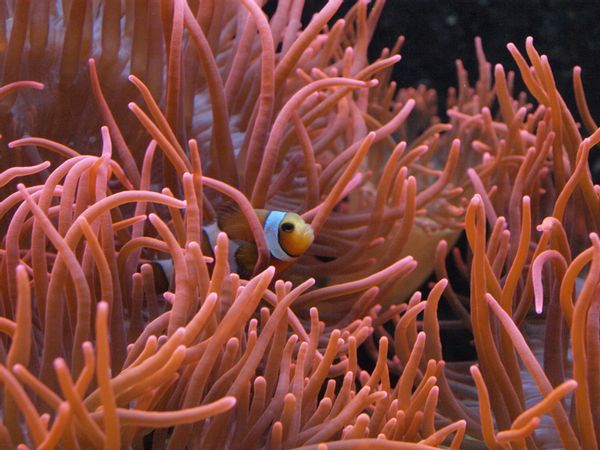
A reef aquarium is simply an aquarium that is capable of including coral or anemones. These types of animals have some specific requirements that are more complex than just fish. Successfully recreating their native ocean environment to the point where they thrive, though, is incredibly rewarding.
A key requirement in a reef aquarium is stable water quality. More advanced filtration equipment, like protein skimmers, is incredibly important to quickly filter out waste before it can mess up your water quality. Livestock like coral is highly sensitive to these types of fluctuations so invest in quality equipment that's correctly sized for the size tank you have. Purchasing or building a sump (an additional tank that sits hidden in the cabinet underneath your tank) for your aquarium will provide more stable water parameters and provide more room for the necessary equipment.
Filtration is only part of the water quality requirements. Reef tanks also require you to pay attention to some more specific water parameters that can generally be ignored in a fish only aquarium. It's important that levels be kept in-line with the recommended values and that they stay consistent. Many species of coral are incredibly sensitive to fluctuations in things like calcium, alkalinity, and magnesium, so extra care must be paid to testing and adjusting these parameters as needed. There are a number of "auto dosing" systems that you can buy that will attempt to regularly inject the proper amount of chemicals into your water.
Since the vast majority of coral and anemones are photosynthetic, lighting is absolutely crucial. Look for full-spectrum lights that are meant to be used in reef environments. Good, quality LED lights have become relatively cheap and are easy to install and maintain. Many "all in one" aquariums and reef aquarium starter kits include lights that are sufficient for keeping coral alive.
Reef aquariums are arguably the pinnacle of saltwater tanks. If you can devote the time, energy, and money necessary, you can successfully recreate an entire ocean environment. These types of aquariums are not generally recommended for beginners but are definitely incredibly rewarding if you're willing to do the work required.